
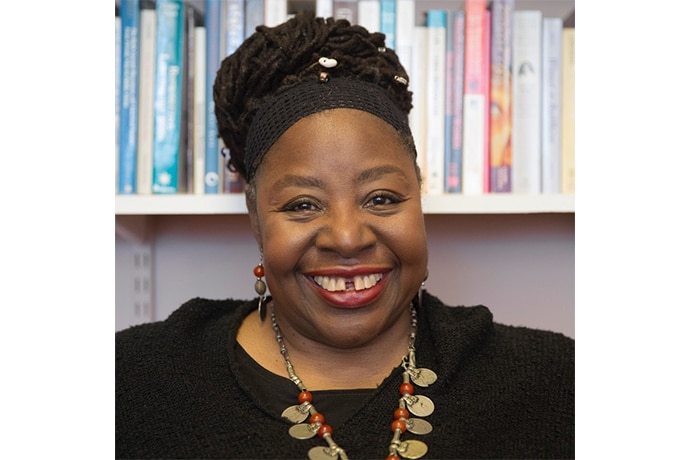
Activist Loretta Ross’s groundbreaking work on reproductive justice has profoundly influenced my understanding of healthcare, advocacy, and intersectionality. I have followed her work with the organization SisterSong throughout my career and was honored to meet and discuss my work and book, Undue Burden, with her recently in New York.
As a physician committed to holistic, compassionate care, I consistently find her visionary framework indispensable to addressing the real-life challenges faced by my patients.
Who Is Loretta Ross?
Loretta Ross was born in 1953 and faced tremendous hardships early in life. At 15, after suffering sexual assault, Ross became pregnant and subsequently lost a scholarship to Radcliffe College. This early exposure to systemic injustices shaped her trajectory as an activist.
In her twenties, Ross was victimized again, this time by medical negligence through a defective Dalkon Shield IUD that caused infertility. This devastating event prompted Ross not only to seek legal redress but also to confront the broader issues of reproductive coercion, medical racism, and gender injustice.
Ross turned her trauma into action, coining the influential political term women of color in 1977 and pioneering intersectional feminist advocacy.
She led the D.C. Rape Crisis Center and later worked for the National Organization for Women, organizing the first National Conference on Women of Color and Reproductive Rights in 1987.
Creating the Framework of Reproductive Justice
In 1994, Loretta Ross, alongside eleven other visionary Black women, developed the concept of reproductive justice. This framework redefined reproductive rights by situating them within broader contexts of social justice, economic equity, and global human rights.
After attending the 1994 International Conference on Population and Development in Cairo, Ross identified the essential human rights dimensions often overlooked by mainstream reproductive movements.
Reproductive justice, as initially coined, encompasses three core principles:
- The right not to have children: Ensuring access to abortion and contraception free from stigma and economic barriers.
- The right to have children safely: Protecting women from coerced sterilizations and ensuring equitable maternal healthcare.
- The right to parent in safe environments: Advocating for conditions such as safe housing, clean environments, economic stability, and freedom from violence and discrimination.
Ross’s reproductive justice framework is globally recognized for its transformative approach, demanding intersectional solutions to systemic barriers like racism, poverty, and inadequate healthcare.
SisterSong: Turning Vision into Collective Action
In 1997, Loretta Ross co-founded SisterSong, a groundbreaking collective of women-of-color-led organizations that operationalized reproductive justice advocacy. SisterSong strategically located its headquarters in Atlanta to amplify the voices of those traditionally marginalized in reproductive rights discussions, particularly those from communities in the U.S. South.
As SisterSong’s National Coordinator from 2005 to 2012, Ross led initiatives that made a difference, notably SisterSong v. Kemp, a pivotal lawsuit challenging Georgia’s restrictive six-week abortion ban.
The case argued that the ban violated the state constitution’s fundamental rights to privacy, liberty, and equal protection, especially given the law’s disproportionate impact on Black, low‑income, rural, and young people who often don’t know they’re pregnant yet.
While the ban has been an on-again, off-again policy, it has been reinstated by the Georgia Supreme Court pending review. SisterSong’s ongoing challenge shows how central the organization has become in protecting reproductive rights in its state.
I regularly draw inspiration from SisterSong’s holistic approach, seeing how the power of intersectional advocacy can be applied in my own clinical practice and advocacy.
Loretta Ross’s Enduring Legacy and Influence
Loretta Ross’s impact continues, recognized notably by the prestigious MacArthur Fellowship in 2022 for her lifelong contributions to human rights advocacy. Today, she teaches at Smith College, focusing on compassionate and inclusive activism, as well as intersectionality. Her concept of “calling in,” fostering constructive dialogues even amid disagreement, significantly shapes current feminist and social justice movements.
Ross’s teachings have bridged divides, strengthened activist coalitions, and inspired a new generation to engage in transformative advocacy.
How Loretta Ross Has Shaped My Advocacy and Medical Practice
Ross’s reproductive justice framework has a profound influence on the way I practice medicine. As I started to grapple with the inadequacies of the reproductive health and rights frameworks, her ideas provided language and clarity that matched the realities of my patients’ lives. Ross’s vision of comprehensive reproductive justice expanded my approach beyond clinical care and advocating for abortion rights to include advocacy addressing systemic inequities.
Ross emphasizes that reproductive healthcare must be envisioned within broader social determinants such as economic instability, racial discrimination, healthcare access, and environmental factors. This perspective has become central to how I deliver care, advocate publicly, and educate others.
My direct engagement with Ross’s work has further enriched my advocacy. She reinforced for me that medical practice must always be grounded in compassion, human rights, and justice.
The Critical Importance of Ross’s Framework Today
In the aftermath of Roe v. Wade’s reversal, Ross’s reproductive justice framework has never been more vital. Her insights guide me daily in ensuring that my patients continue receiving equitable and comprehensive reproductive care, especially when they come from marginalized communities.
Ross’s intersectional lens highlights how restrictive abortion laws disproportionately affect people of color, low-income individuals, and marginalized communities. The reproductive justice framework compels us to defend existing rights and actively dismantle the structural barriers that affect healthcare, economic stability, and community safety.
Loretta Ross’s Lasting Impact
Loretta Ross’s lifetime achievements remind us that reproductive justice is fundamentally about affirming human dignity and securing equitable rights. Her courage and clarity have inspired countless advocates, including myself, to pursue holistic solutions that address intersectional oppressions.
Through her transformative work, Loretta Ross has equipped us with the tools and vision necessary to strive for a society embodying reproductive justice.
To explore more and support ongoing reproductive justice advocacy, visit SisterSong.
